Screens
Blue light glasses: what the filter does and how to pick a pair
What the filter actually does
The coating reflects part of the high-energy blue range that LED screens and office lighting push out, plus UVA and UVB outdoors. Wearers most often report less end-of-day dryness and glare, and an easier time winding down after late screen sessions. What the filter does not do: fix blurry print (that is a strength problem, see the strength guide), replace breaks from the screen, or treat a headache that was really about posture and monitor height. The research on blue light and eye strain is genuinely mixed; the coating costs a few dollars here, so testing it on your own evenings is cheap.
Clear, not yellow
Gaoye filters live in a clear coating rather than a yellow tint, so screen colors stay honest, which matters for photo work and for looking normal on camera. Under some lighting you catch a faint blue reflection off the lens; that is the coating rejecting the range it is built to reject.
Shape is a face decision
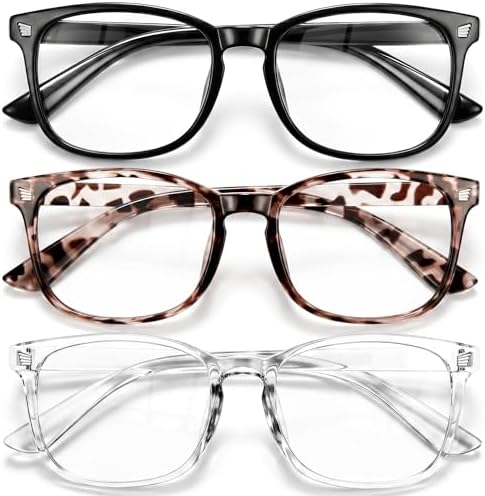
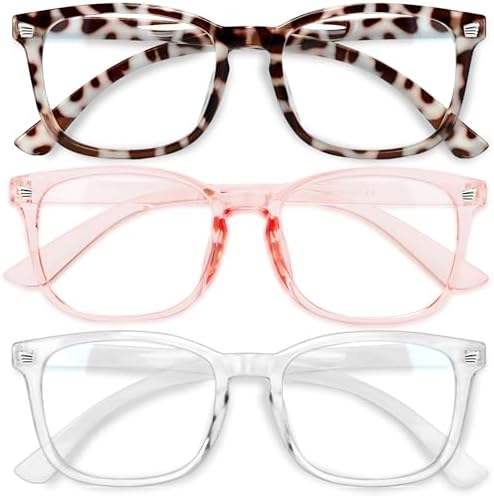
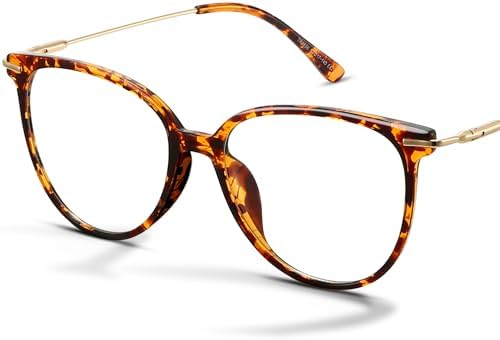
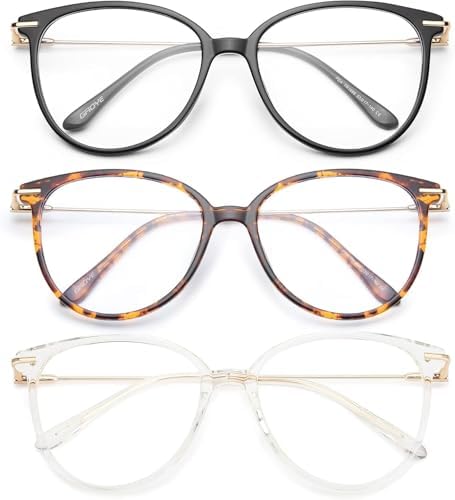
The rounds run retro: thin metal or TR90 rims around a 51 to 52 mm lens with a keyhole bridge, in finishes from matte black to tea leopard. The squares read office and photograph conservative. The lens spec is identical, so pick the one your mirror votes for; the materials guide covers how metal, TR90 and polycarbonate wear differently.
Singles, packs and the gaming pairs
The 2-packs and 3-packs exist because these glasses live at desks, and desks multiply: office, home, laptop bag. A 3-pack runs about $3 to $5 per pair. The gaming pairs at $5.99 to $6.99 are the entry point: same coating, lighter styling, cheap enough that skeptics can run the experiment for the price of lunch. The ultralight singles are for people who already know the filter works for them and want the nicest single pair.
Give the test two weeks
Coating or not, eyes adapt to new glasses over a few days. Wear the pair through two normal work weeks before judging; the difference, if it shows, tends to show at 9pm rather than 9am. Screen habits do half the work regardless, and the eye strain guide covers that half.